Key Takeaways
Accurately calculating your coffee cost per cup requires adding all expenses together, including variable costs, fixed costs, and hidden costs like espresso machine depreciation and ingredient waste. Once you know the true cost per cup, you can confidently determine how to price coffee drinks using a standard food cost percentage. This ensures your gross profit covers all expenses, leading to a sustainable and thriving business.
Many coffee shop owners and hotel F&B managers struggle to hit their target coffee shop profit margin. Even when daily sales seem satisfactory, robust revenue can easily mask the hidden costs leaking into every cup served. From the coffee grounds wasted while dialing in the grinder and the depreciation of equipment, to poorly planned ingredient costs, failing to understand your actual expenses turns pricing into a guessing game. Ultimately, this harms your long-term profitability and business sustainability.
If you are wondering, “How much does it actually cost to make a cup of coffee for a café ?” or “How do I calculate the cost of each coffee drink on my menu ?”, this article will dive deep into a detailed, easy-to-understand coffee shop cost breakdown. You can apply these insights immediately to set prices that generate sustainable profits.
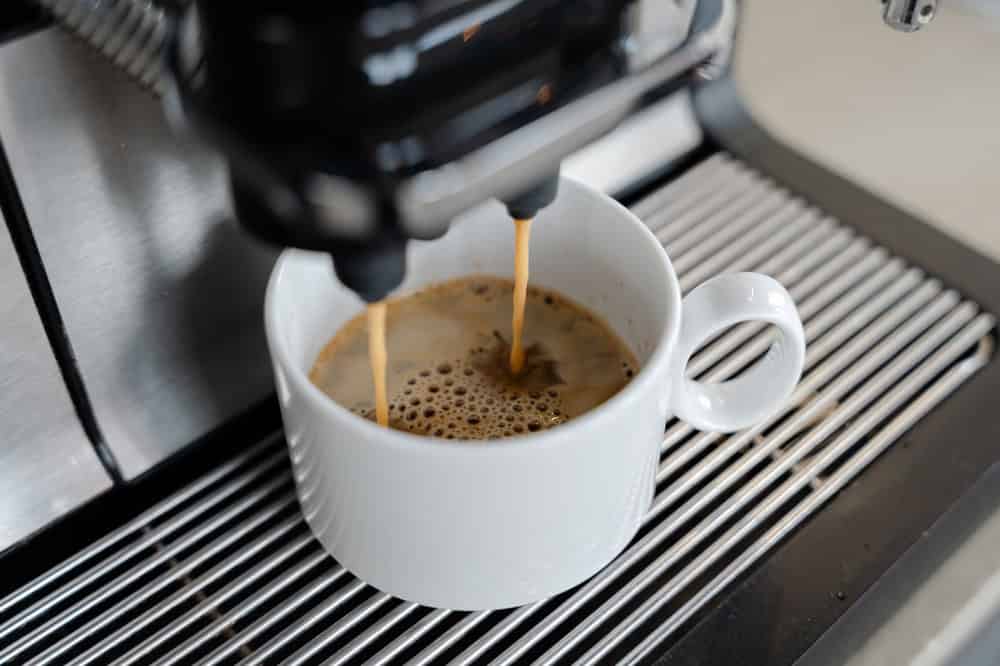
What Are Cafe Expenses? A Coffee Shop Cost Breakdown
Calculating your coffee cost per cup should always begin with understanding the entire expense structure within your F&B department. These expenses fall into three main categories:
1. Variable Costs
These are direct ingredient costs that fluctuate based on the number of cups you sell. Examples include:
- Coffee beans
- Fresh milk and alternative milks
- Syrups and sugar
- Ice
- Packaging (cups, lids, straws, and cup sleeves)
2. Fixed Costs
These are the regular monthly expenses you must pay regardless of whether your sales are high or low. Examples include:
- Rent or space leasing
- Salaries for full-time staff
- Marketing and advertising fees
- Utilities (water, electricity, internet)
3. Hidden Costs and Depreciation
These are often overlooked when calculating the cost per cup, yet they significantly impact net profit. Examples include:
- Coffee grounds lost during extraction or grinder adjustment
- Poor-quality espresso shots that must be thrown away
- Leftover steamed milk
- Depreciation of equipment and coffee machines
Comparison Table of Coffee Shop Costs
The table below summarizes the cost structure per cup to give you a clear, easy-to-understand overview.
| Cost Type | Expense Characteristic | Examples | Impact on Pricing |
|---|---|---|---|
| Variable Costs | Changes with sales volume | Coffee beans, milk, cups | Used to calculate direct cost per cup |
| Fixed Costs | Remains the same every month | Rent, employee salaries | Used to calculate the monthly break-even point |
| Hidden Costs | Concealed and hard to notice | Spilled coffee, broken machines, shot testing | Must be added as a spoilage/waste rate |
An Easy Guide on How to Calculate Coffee Cost Per Cup
How do cafés calculate the cost of espresso, milk, syrup, and other ingredients per drink ? The core secret to accurate calculation is breaking down the price of every ingredient into actual usage amounts. This is done in two steps:
Totaling Direct Ingredient Costs Per Cup
This method involves adding up the price of all ingredients used in a single serving to find the base cost. For example:
- 1 kg of coffee beans costs 600 THB. Using 20g per cup = 12 THB cost.
- 1 bottle of fresh milk (2 liters) costs 90 THB. Using 150ml per cup = 6.75 THB cost.
- Cup, lid, and straw = 4 THB cost.
- Total preliminary direct cost = 22.75 THB.
Adding the Spoilage and Waste Rate
Serving coffee in a hotel or cafe requires strict quality standards, which naturally leads to some wasted ingredients. We recommend adding a 5-10% spoilage rate to your direct costs to prevent losses. For example:
- 22.75 THB cost + 10% spoilage rate (2.27 THB) = Net coffee cost per cup of 25.02 THB.
Calculating Coffee Costs for Commercial Machines in Hotels
For larger businesses like hotels or premium cafes that invest in high-end equipment, calculating the profit margin or coffee cost per cup requires factoring in equipment depreciation.
Allocating Equipment Depreciation
Divide the value of the coffee machine by its expected lifespan (in days) and the projected number of cups sold per day. For example, a high-end machine lasting 5 years (1,825 days) selling 100 cups a day will add just a few Baht to the depreciation cost per cup. This figure should be added to your overall cup cost.
Variation Based on Sales Volume
Your daily serving volume directly impacts the unit depreciation cost. The higher the sales, the lower the machine cost per cup. Running promotions to increase sales volume is an excellent way to reduce this specific cost burden.
Preventive Maintenance Budget
Don’t forget to include scheduled maintenance costs in your operating expenses. This ensures your machine runs stably, extracts consistent high-quality shots throughout its lifespan, and minimizes unexpected breakdowns that cost you lost revenue.

How to Price Coffee Drinks for Maximum Profit
Once you know your exact cost per cup, the next step is setting the right retail price. Here are the most effective pricing strategies you can adapt for your business:
Pricing Using Food Cost Percentage
F&B businesses typically aim for a food cost percentage of 25-30% of the selling price. The formula is: (Cost per cup ÷ Target cost percentage) x 100 = Selling price. For example, if your coffee cost is 25 THB and your target food cost is 30%, the selling price should be (25 ÷ 30) x 100 = 83.33 THB. You can round this up to 85 THB.
Pricing Using Gross Profit Margin
You can also set prices to achieve a specific gross profit margin that comfortably covers your fixed costs like rent and labor. If your cafe has high fixed expenses, you might need to price your drinks to hit a 75-80% gross profit margin to ensure a healthy net profit remains.
Pricing for Specific Hotel Service Areas
The service location also influences pricing. A Grab & Go station might focus on accessible pricing and high volume. However, if you are serving coffee in a Lounge or via Room Service, you can add a premium for “Service & Experience” to your final price.
Keep Your Cafe on Budget with Top Coffee Machines from CoffeeWORKS
A detailed calculation of your cup cost is the crucial first step to generating profit. However, maintaining long-term cost control without sacrificing coffee aroma and quality heavily depends on the efficiency of your brewing equipment.
Choosing a commercial-grade machine for your hotel or a world-class coffee machine for cafe setups ensures perfect extraction, high stability, and precise ingredient control. This reduces unnecessary coffee ground waste and smoothly handles high-volume orders. As a result, your cost calculations remain predictable, helping you achieve a faster return on investment. Elevate the standard of fresh coffee solutions for your hotel or shop today.
Shop for high-quality coffee machines from world-renowned brands at CoffeeWORKS. You can experience the machines firsthand at CoffeeWORKS Experience Centers nationwide. Our CoffeeWORKS CARE technical team is ready to maintain your equipment. For more information, call 02-425-1395 or add us on LINE OA: @coffeeworks today!
References
- Understanding Coffee Shop profits. Retrieved September 28, 2026, from https://espressoacademy.it/en/guide-en/coffee-shop-profits-explained/
Frequently Asked Questions About How to Price Coffee Drinks (FAQs)
How much does a “Buy 1 Get 1 Free” promotion impact the coffee cost per cup ?
A Buy 1 Get 1 Free promotion immediately doubles your direct ingredient (Food Cost) per transaction. Therefore, operators must carefully calculate their costs to ensure that the remaining gross profit after deducting the ingredient costs for both cups is still enough to cover daily fixed expenses.
How often should I update my cafe’s cost per cup data ?
You should review and adjust your coffee and ingredient costs at least every 3-6 months, or immediately after a significant price change from your suppliers. This prevents accumulated hidden losses caused by rising costs while selling at old prices.
When should a commercial coffee machine be replaced to prevent maintenance from becoming a hidden cost ?
Generally, commercial coffee machines have a lifespan of 5-7 years, depending on maintenance. If you notice inconsistent temperature issues, need to call a technician more than 3-4 times a year, or find that spare parts are becoming rare, investing in a new machine is more cost-effective than bearing the burden of repair bills and lost income during downtime.